Weekly Report
Subject: Introduction to Journalism
Facu;ty: Professor Vartika Nanda
Week: 3rd August – 8th August
Weekly Report
Subject: Introduction to Journalism
Facu;ty: Professor Vartika Nanda
Week: 3rd August – 8th August
Week from 4th August 2025
Subject: Introduction to Journalism
Teacher - Vartika Nanda
Topic Covered: Definition of News
Discussed the meaning and various interpretations of "News"
Comparing definitions from different scholars and media organizations.
Emphasized that news should inform, educate, and sometimes entertain.
In-Class Task
Write a 200-word descriptive piece on “Your First Day of College”
Deadline: 12:40 AM, 4th August 2025
Assignment Details
Write 5 Best Possible Definitions of News
Research and Write on the Nature of News
Write About the Ingredients of News
Students who were allotted the respective topic by ma’am-:
Name of the students
Topic alloted
Nibedita and Samya
News: meaning, definition and nature; Ingredients of news
Students who volunteered for the particular topics-:
Name of the students
Topic
Avira and Khushi - The news process
Geet- Yellow journalism
Aadhya - Embargo
Name of the Student - Agrima and Ayushi
Topic - Hard news and Soft news
Week from 11th August
Topics to be discussed
Definition of News
Nature of News
Ingredients of News
Hard News and Soft News
Weekly report
Assignment 1 (Describe in 200 words about your first day in college)
Assignment 2 (Write in 100 words that what you have understood in hard news and soft news)
Verification of News
Assignment - Note about verification in 50 words
Assignment - What is the amount of verification that we witness on social media platforms
Week from 18th August
Topic Covered:
Discussed the meaning of, and differences between Hard and Soft news
Components of news and explanation of each component
Explanation of Embargo with examples
Topics to be Covered in the next class:
Attribution
Balance and fairness
Brevity
Responsibilities assigned:
Document on balance and fairness
Riya Singh and Priya
Structure of ‘use of internet’
Vedika and Shreya
Assignment Details
1. Write about hard and soft news in not less than 200 words in your notebook. Deadline- 21 August 2025
2. Write an essay on components of news, and include as many pointers as possible. Deadline- 25 August 2025
Practical Assignment Details
The class was divided into two groups:
Group 1:
LEADERS: Nibedita and Chandrani
Create a handwritten newspaper with major focus on photographs and journalism
Must not exceed 4 pages and can be made on A4/A3 sheets
Group 2:
LEADERS: Shagun and Priya
Create a handwritten newspaper with major focus on hard and soft news
Must not exceed 4 pages and can be made on A4/A3 sheets
Duration- 1 month
Week from 25 August
Responsibilities Assigned:
Chandrani - Brevity and Attribution
Priya and Riya - Balance and Fairness
*Week: 8 September 2025-14 September 2025*
*Topics Covered: *
- Language of News- Robert Gunning
*Assignments: *
1. Write a summary of your understanding of the reading on ‘Sources of News’, in 100 words.
(Deadline: 12 September 2025)
*Test:*
Test on 15 September 2025, on the following topics:
1. Ingredients of News
2. Hard News vs. Soft News
3. Verification and Embargo
4. Attribution
5. Brevity
6. 5 Ws and 1 H
*Week: 15 September 2025-22 September 2025*
*Test Conducted on: *
1. Ingredients of News
2. Hard News vs. Soft News
3. Verification and Embargo
4. Attribution
5. Brevity
6. 5 Ws and 1 H
*Checking of Test done on 19 September 2025*
*Week: 22 September 2025 - 29 September 2025*
*Topics Covered in Class: *
1. Sources of News
2. Press Information Bureau
3. Discussion of Answer Scripts
*Deadlines Announced: *
1. Submission of Assignments- October 27, 2025
2. Final Test- November 3, 2025
Practical Class (Group 2) Assignment:
Create a document of research on Sources of News (led by Priya and Riya).
*Weekly Test- September 29, 2025*
_Syllabus:_
1. Sources of News
2. Press Information Bureau
3. Primary and Secondary Sources
4. Language of News- Robert Gunning
5. Balance and Fairness
*Weekly Report: 29 September 2025 - 3 October 2025*
*Assignments Given:*
1. Write a letter to your 10 year older future self, preferably with an emphasis on LSR.
2. Research on the use of archives in print media
3. Write about your understanding of Language of News
This is a tentative and a brief report, compiled in the interest of the students. This compilation has been done by Ayushi Rai, batch of 2027, Department of Journalism, LSR. Both these papers are taught by Professor Vartika Nanda.
1)Topic of defamation was covered under these sub-heads
What constitutes defamation
The different types of defamation (civil and criminal)
Defenses against defamation
Crimes against women about defamation
Relevant case studies: Sakal Papers Limited vs Union of India and Subramanyam Swamy vs Union of India
2)A class activity was conducted where students were asked to write a 300-word piece on defamation to test their comprehension.
3)Assignments:
Two handwritten assignments were given to be submitted by next Monday.
Surbhi and Vidhi were specifically assigned the topic Women and Advertisement to research and present.
● A detailed discussion was conducted on Live Reporting vs. Studio Reporting, focusing on their differences and the guidelines specific to live reporting in India.
● A session on Sting Operations covered:
-Meaning and types of sting operations.
-Legality and comparison of sting operations in India and other countries
-Legal actions that can be taken against sting operations.
-Positive and negative aspects of sting operations.
-Violations of Article 21 and concerns regarding decency and morality.
-Case studies: Aarushi Talwar Case and Live India Case.
-Drawbacks of sting operations.
● A discussion on Women and Advertising explored:
-The portrayal of women in advertisements
-Key concepts and vocabulary related to women in ads
-Government guidelines and ethical standards
-Women empowerment through advertising and its societal impact
-Case studies and the DD Codes for Ads
-Regulatory body codes and suggestions for improvement
● Tasks:
1)Gourvi was assigned a presentation on Regulatory Bodies.
2)Anushka was assigned a presentation on Phone Tapping.
● Assignments:
Digital assignments were given on the following topics:
1)Sting Operations: 1500 words
2)Phone Tapping: 800 words
3)Women and Advertising: 600 words
17th September: Phone Tapping
The class engaged in a discussion on phone tapping, covering:
What constitutes phone tapping
Article 21 and the right to privacy
Authorized phone tapping and the authorities involved, including the Intelligence Bureau, CBI, ED, NCB, CBDT, DRI, National Investigation Agency, RAW, DSI, and the Delhi Police Commissioner
Relevant laws, such as the Indian Telegraph Act and Article 21
Circumstances where phone tapping is permitted (public emergency, public safety, national security)
Case study: Aryan Malkhani case and phone tapping by the press
A written assignment on phone tapping was assigned.
20th September: Regulatory Bodies
The class explored the concept of regulatory bodies, focusing on:
Forms of control exercised by the government
Media regulation during emergencies
Different types of regulation: statutory, self-regulation, co-regulation, and independent regulation
Regulation of media infrastructure, content, conduct, and ownership
Different types of regulation: statutory, self-regulation, co-regulation, and independent regulation
Regulation of media infrastructure, content, conduct, and ownership
Case studies: Bennett Coleman and Company Limited, ownership of Hindustan Times by the Kasturi family
Regulation of broadcasting, radio, social media, and print media
Discussion on media freedom and the Press Council of India (PCI)
A comparative analysis of media regulation in the US, China, and Pakistan
A written assignment on Media Ownership Patterns was given.
Report by:
Angel Noah Aruva
CR of Batch 2025/26
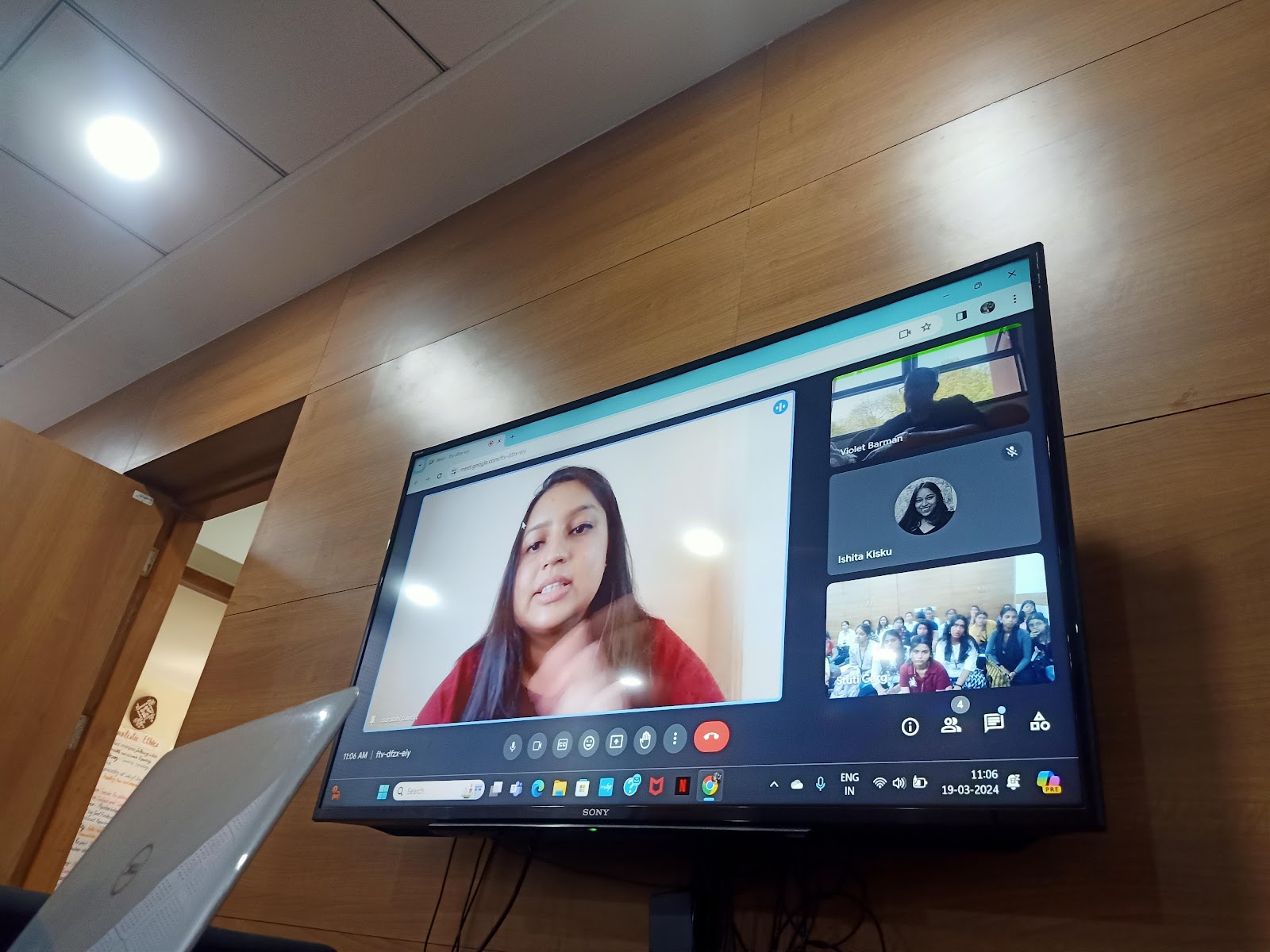
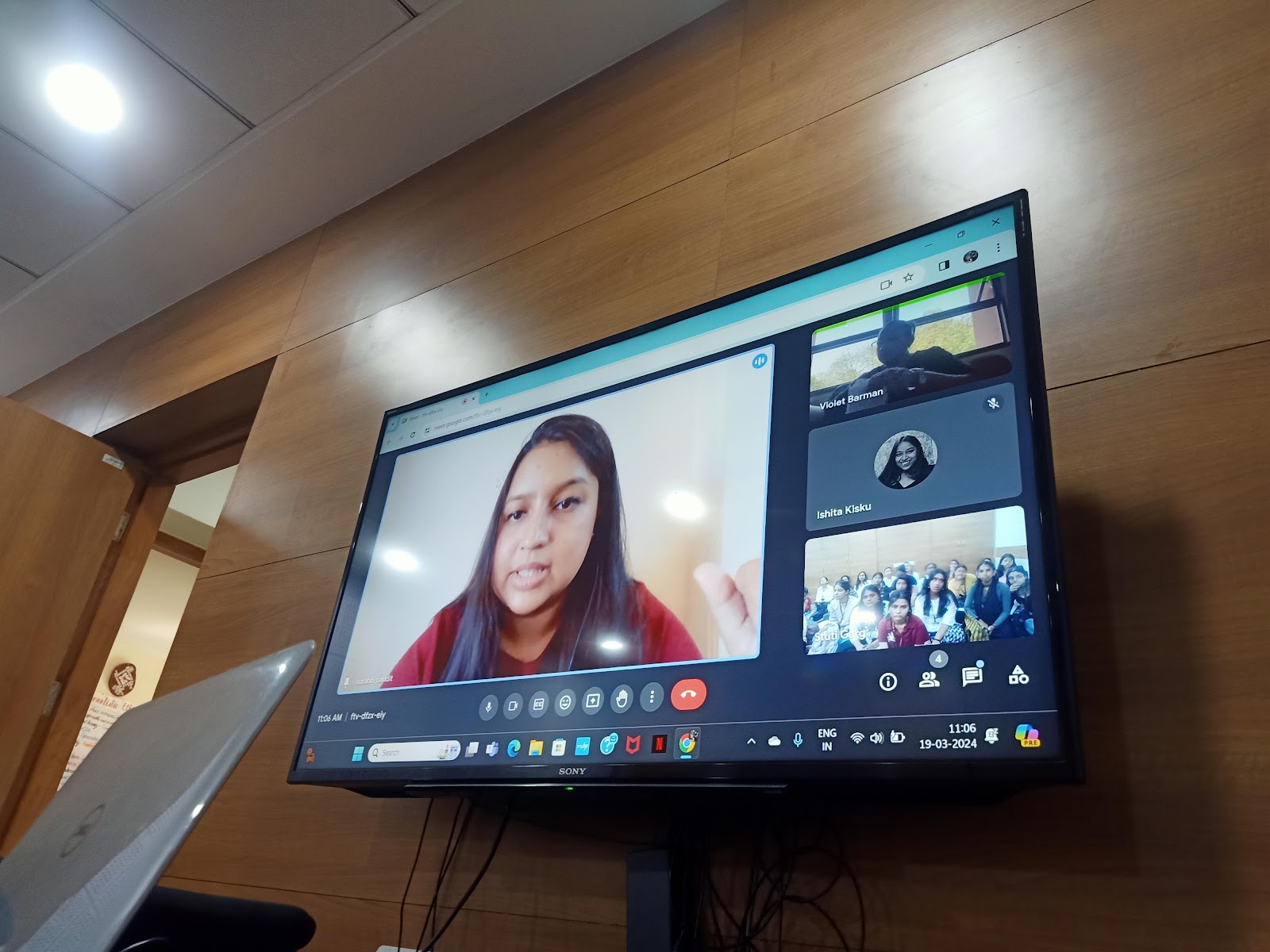
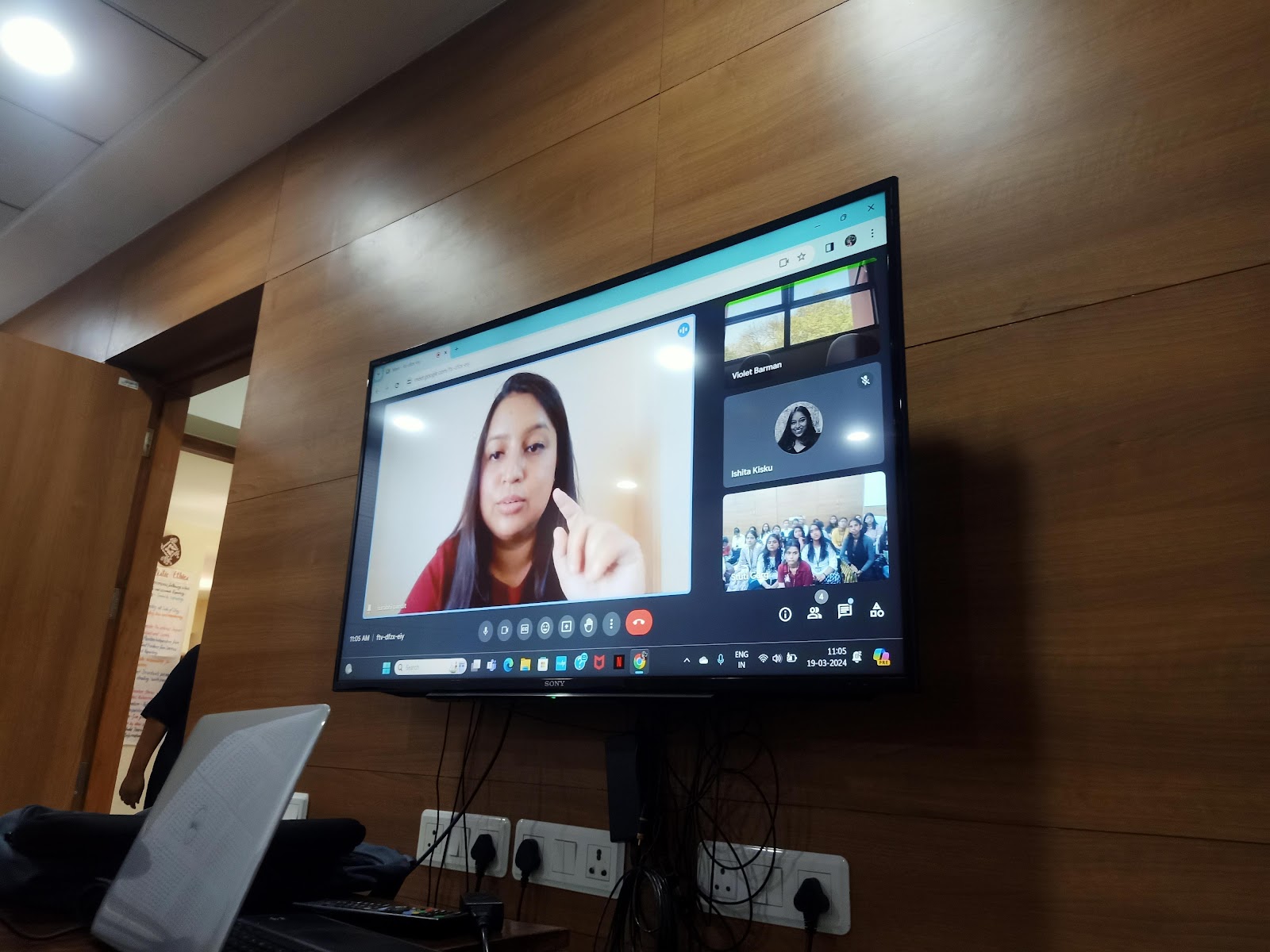
Guest:Surabhi Pandit
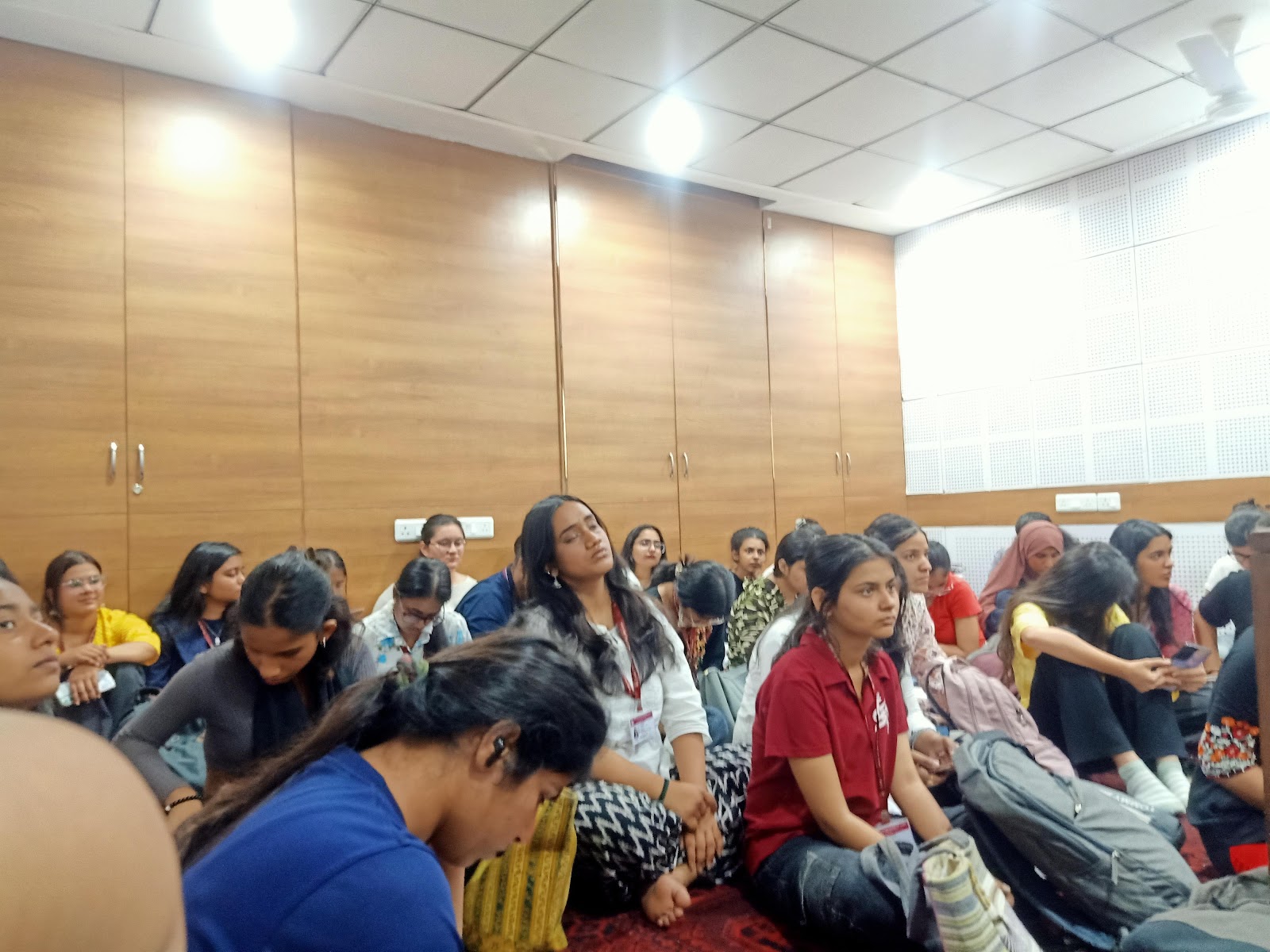
Delhi, March 19, 2024: The workshop on sound was organized by the Journalism Department of the Lady Shri Ram College for Women as one of the many pre-events organized for the annual academic fest, Juxtapose. Professor Violet Barman, one of the faculty members of the Department of Journalism, was the main coordinator of this workshop. This workshop was solely dedicated to the students of the journalism department, and that too, for the 1st and final year students, as Sound is a part of their courses. The invited guest for the event was Surabhi Pandit, an experienced professional in sound and sound editing. There were around 30 students attending the workshop. This workshop was conducted virtually.
The event started with a brief welcome and introduction of the guest and was further continued with the guest thanking and proceeding with the explanation of the topic. Miss Surabhi started with a self-introduction and then cleared up the topics that she was to take up in the upcoming duration.
The central topic of the workshop was “the importance of sound with respect to the point of view of storytelling.” She went on to describe the stages of content production and also highlighted the key points to be kept into consideration in all three stages, i.e., pre-production, shooting, and post-production. It was an informative workshop, which helped everyone attending it have a broader spectrum of the topic.
The entire event was concluded with a small question-and-answer round. Few of the attendees put forth their doubts that were very well cleared by Miss Surabhi leaving no confusions.
At the end, Professor Violet Barman thanked the guest on behalf of the entire department and invited her for more future workshop conduct, on which a positive response was proposed by the guest.
Report by:
Yogita Mishra
1st Year
Department of Journalism
Guest: Ambrish Saxena
On March 6, 2024, an enriching session took place as students from 2nd year of the Department of Journalism engaged with Ambrish Saxena, a distinguished journalist turned media educator. The session was marked by insightful discussions and real-life case studies, as Ambrish Sir shared his expertise on various aspects of the media industry.
Delving into the core paper, Broadcast Production, Ambrish ji discussed crucial topics such as the Public Service Model in India and the Global Overview of Public Service Broadcasting. He also shed light on the private broadcasting model in India as well as functions and operations of a broadcast channel.
Tracing the evolution of Radio from the colonial times till present day, Sir mentioned the contemporary relevance of these topics. He also provided advice to the audience of aspiring journalists to possess ‘media instinct’, a keen desire to learn about current affairs and occurrences around the world. Furthermore, he explained the importance of critically analyzing journalism within its broader political and social context, rather than seeing it in isolation.
The session ended with an inquisitive question and answer segment where students clarified their doubts and were glad to gain new perspective and understanding pertaining to the public service broadcasting and media industry in general.
Report By:
Afza Khan
2nd Year
Department of Journalism
WEEK 1: 22nd - 26th January, 2024
This is a brief overview of the classes.
-> The Syllabus for Semester 1 was discussed and the first topic of UNIT 1 was “Roles and Responsibilities of a Reporter” was covered.
The students learned-
Some of the major qualities that make a good reporter which are :- S/he must have a mastery of the written or spoken language of the medium of expression: This will enable him/her to interact easily with news sources, eyewitnesses or even the victims of events.S/he must be current and keep abreast of events and happenings: In the media industry, yesterday’s news is stale and no more needed. To remain relevant in the industry, therefore, the reporter must keep abreast of happenings in and around him/her.
A good reporter must be fair, accurate and objective in his news writing and reporting job. Fairness, accuracy and objectivity are news virtues, which the profession thrives on.A good reporter must be proficient in Research Abilities: Proficient in researching topics through various sources, including interviews, documents, and online resources. Effective research skills help in gathering reliable information and verifying facts.
Journalistic work often comes with tight deadlines. The ability to work efficiently under pressure while adhering to deadlines is crucial for meeting publishing or broadcasting schedules and staying relevant in a fast-paced news environment. Reporters must maintain neutrality and avoid personal biases in their reporting. Objectivity ensures that the news is presented fairly, allowing the audience to form their own opinions based on accurate information.
-> Students were assigned to research upon interviews and its stages, and write an elaborate answer for the same-
There are mainly 3 stages of an interview, them being the
Pre Interview Stage- Before the interview, preparation is crucial. This stage involves researching the interviewee, crafting insightful questions, and considering the overall tone and objectives of the interview.
The Interview Stage- The main stage involves conducting the actual interview. Here, the interviewer must actively listen, adapt to the interviewee's responses, and maintain a professional and engaging atmosphere to extract valuable information.
Post Interview Stage- After the interview, the focus shifts to processing and packaging the information. This includes editing, fact-checking, and organizing the content for publication or broadcast, ensuring accuracy and clarity before it reaches the audience.
-> Students were assigned a task to write “Qualities of a reporter” and “Responsibilities of a reporter” for which the deadline was set for 23rd September.
-> A task was assigned to find and bring paper clips of any interview which would be discussed on 29th January.
CR’s; Trisha Verma
Lakshmi Priya Ghosh
WEEK 2 : 29nd January - 02nd February 2024
-> The multiple stages of Interview was thoroughly discussed in the class along with the paper clips of different interviews that the students brought to class.
-> Yogita presented the definition and key aspects of interviewing.
-> Press Conferencing and its types were discussed in the class and presented by Somita, these were-
Political Press Conference, Financial/Economic Press Conference, Celebrity/Entertainment Press Conference, Crisis/Emergency Press Conference, Product Launch Press Conference, Sports Press Conference, Legal Press Conference, Nonprofit/Charity Press Conference, Technology/Innovation Press Conference, Government Briefing Press Conference which were discussed comprehensively.
-> Students were assigned to search and cover for a Press Conference held for a book, the deadline for the same was set for 30th January, 2024.
-> news agency, organization that gathers, writes, and distributes news from around a nation or the world to newspapers, periodicals, radio and television broadcasters, government agencies, and other users. It does not generally publish news itself but supplies news to its subscribers, who, by sharing costs, obtain services they could not otherwise afford. They are also called wire or news wire . They do not directly deal with the public .
PTI - The Press Trust of India Ltd., commonly known as PTI, is the largest news agency in India. It is headquartered in New Delhi and is a nonprofit cooperative among more than 500 Indian newspapers. It provides news coverage and information of the region in both English and Hindi.
UNI - United News of India, is a multilingual news agency in India. It was founded On 19 December 1959 as an English news agency. In 1992, it started its Urdu news service and hence became the first news agency to provide Urdu news. Currently, it is the second largest news agency in India, supplying news in English, Hindi, Urdu and Kannada languages. Its news bureaus are present in all state capitals and major cities of India.
• In news agencies every minute is considered as deadline - ( a ) Timeliness is paramount: Agencies strive to be the first to break stories, providing audiences with the freshest information
(b) Multiple platforms, constant demand: News feeds 24/7 across various platforms - print, online, broadcast. This creates a continuous need for content, with deadlines for each format.
-> Further on Coverage Speeches were discussed and presented by Priyanka, it was as follows- a formal talk that a person gives to an audience .
Moreover stages of speech - preparation was discussed, these are-
1 .Know your audience,
2. Know the occasion
3. Select a topic
4. Select a purpose
5. Gather potential content
6. Gather more content than actually used
7. Organize content
8. Phrase the speech
A speech is informed in advance so that audiences who are interested can attend as well as journalists can be prepared with it .
-> Lastly towards the end of the week, the class focused on Neutrality, Biasness and gatekeeping in news reporting. Journalistic integrity emphasizes maintaining neutrality to ensure fair and accurate reporting, fostering public trust in the media's role as an objective source of information. Recognizing and addressing biases is crucial for responsible journalism.
->Following assignments were allotted to students this week and 5th February was set as the deadline for the same-
*Write about Importance of wire services and its role in dissemination of news in 100 words.
*Write about PTI and UNI in bullet points
*Write a short note of about 100 words on neutrality
8.Select one story in newspaper which was downplayed, paste it and explain the same in notebook
9.Every Friday- everything learned that week to be posted with the heading “Weekly Learning”
10.Use any newspaper clip written in inverted pyramid and 1 paragraph of how it is important in notebook
CR’s- Trisha Verma
Lakshmi Priya Ghosh
WEEK 3 : 05th- 9th February, 2024 -> Lead in news story, its role, significance and types were thoroughly discussed in the class- In journalism, a lead is the introductory part of a news story that aims to capture the reader's attention and provide essential information about the article's subject matter. The lead serves as the hook that draws readers into the story.
The Types of leads are 1 ) direct address lead 2 ) the circumstantial lead 3 ) the statement and quotation lead 4 ) the descriptive lead 5 ) the summary lead 6 ) contrast lead 7 ) anecdotal lead 8 ) question lead
->Furtheron the class discussed the difference between a feature and an article. a feature is a type of article that delves deeply into a specific topic, providing detailed analysis and personal perspectives, while an article is a broader term encompassing various written pieces, including news reports, opinion pieces, reviews, and features.
-> The class then moved into the discussion of beats, they refer to specific subject areas or topics that reporters or journalists specialize in covering. These beats allow journalists to develop expertise and in-depth knowledge about particular subjects, enabling them to provide comprehensive and insightful coverage.
-> Beats too are of multiple types of which, Sports Beat was discussed in depth. sports beat involves covering athletic events, sports teams, athletes, and sports-related news. Reporters on the sports beat provide game coverage, conduct interviews with players and coaches, analyze sports trends, and report on the business side of sports, including contracts, trades, and sponsorships.
->The following assignments in regards to the topics discussed were assigned this week- • Write about the significance of Leads in about 100 words which is to be posted on the blog, the deadline for which was set on 7th February • Write an elaborate answer on significance of lead and its types • Also attach any 3 press clips of the discussed leads • Explain the difference between a news article and a feature. Add 2 press clips of each • Explain the types of Features in notebook • Write about the significance of sports beat in about 100 words and post the same, • Write an elaborate answer on Sports beat in about 800 words in the register. CR’s- Trisha Verma Lakshmi Priya Ghosh WEEK 04 : 12th- 16th February, 2024
-> This week the types of beats were further elaborated upon beginning with Education beat, all students were assigned to watch the lectures on education beat uploaded on the official website. We discussed- The education beat in news refers to the coverage and reporting of events, developments, and issues related to the field of education. Journalists covering this beat may report on a wide range of topics, including policy changes, school funding, curriculum updates, educational trends, challenges facing students and educators, advancements in teaching methods, and the impact of technology on learning. The education beat plays a crucial role in informing the public about important issues affecting schools, universities, students, and communities, and it helps foster dialogue and debate around education reform and improvement.
-> Furthermore, Crime beat was thoroughly deliberated upon, taking inspiration from Vartika mam’s lectures. It is a specific area of reporting within journalism that focuses primarily on covering crime-related stories. Journalists assigned to the crime beat typically investigate and report on various criminal activities, including but not limited to, murders, robberies, assaults, white-collar crimes, and organized crime.
-> Towards the end, Health beat in the news was covered thoroughly. A few examples of the same can be A health beat news story might cover the introduction of a new vaccine, detailing its effectiveness against a prevalent disease and its potential impact on public health. Alternatively, it could report on a breakthrough study revealing the long-term effects of a particular diet on cardiovascular health, providing actionable insights for readers seeking to improve their well-being. Another example could be an investigative piece uncovering deficiencies in a local hospital's emergency response protocols, shedding light on systemic issues affecting patient care and prompting calls for reform from healthcare professionals and policymakers.
-> Moreover the following tasks were assigned this week for the same- * Write about “What is Beat Reporting” in about 100 words * Define Crime, compile the definitions from different dictionaries * Explain the basic ingredients of crime reporting and its types. * Summarise Education Beat and paste it in the comments section. CR’s- Trisha Verma Lakshmi Priya Ghosh
WEEK 04 : 19th- 23rd February, 2024
-> This week the class focused on health beats and why should one study it?. The following was discussed-
Sources- Journalists covering the health beat rely on a variety of sources to provide accurate and informative stories. These sources include medical experts such as doctors, nurses, and researchers, who offer professional insights into health topics. Government agencies like the CDC, WHO, and NIH provide official data and guidelines. Academic research, often published in medical journals, offers newsworthy findings. Health organizations, patient advocacy groups, and hospitals contribute stories, data, and expert opinions. Health surveys, reports, and information from pharmaceutical companies also play a role.
Areas of focus for health journalists- Health journalists often focus on public health issues such as vaccination campaigns and disease outbreaks, advancements in medical research and treatments, and the impact of health policies on communities' access to care and well-being.
Issues health journalists should focus on
-> Further on in the class
IBM WEEKLY REPORT
WEEK -1 (19th Feb-25th Feb)
The first year students of department of Journalism ,Lady Shri Ram College attended the lecture for the paper “ Introduction to Broadcasting Media” taken by professor Dr. Vartika Nanda . The syllabus for semester 1 was discussed in class and the students were assigned to research upon “Elements of Television News Story” from the Unit 3.
The students learned the rules while writing the news for television and the basic elements of television news story. Two students presented their thorough research on this topic before the whole class.
In the next class, a presentation was conducted in class on “ Elements of News Story Bulletin”. The presentation was brief and understandable. Students discussed the various examples as well as the limitations and challenges.
WEEK 2- 26th Feb-5th March
* “ Electronic News Gathering and Electronic Field Production” was discussed in detail. Presentation was crisp and well researched. Students discussed about the difference between Electronic News Gathering and Electronic Field Production as well as their unique features, advantages and disadvantages.
* In the subsequent class, the students were given the assignment to write a news script on the topic” Elections”/ “DU Festivals”. Number of written assignments were done in the class. Students presented their news scripts in the class and received feedback from our professor.
(written by Vrinda Nangia)
November, 2023
Following readings were discussed in the class in the first week of November. Syllabus has been completed. Now, we are revising selected topics.
BOOKS
News Reporting and Editing
•Concept Of News
News- Concept and Definition- News values.
•The News Story
News story structure-Elements of news story-5Ws and H- Intro or lead- Types of intro with
examples- The body- Language of news
•News Gathering
Source or news-Hard and Weak sources- News agencies-Monitoring- Press release or handout-
Press Conference- Press briefings- Division of labour- Beats- Planning news coverage
•Newspaper vs Radio and TV news
Impact of electronic media on newspaper-Differences Radio News-Translation- TV News
2)The Online Journalism Handbook
•Introduction to the second edition
•Histories futures and the changing business technologies of journalism
•Writing for social media and chat apps
•Community, social media management and user generated content
3)Citizen Journalism Global Perspectives
•Histories of Citizen Journalism
•Citizen Journalism in India: The Politics Of Recognition
•OhmyNews: Citizen Journalism in South Korea
•User Generated Content and Journalistic Values
•The Future of Citizen Journalism
4.An Introduction To Journalism
• What Is News?
*Selecting the news
Newspapers
Radio news*
Television news
Online news
Conclusion
•Writing a Story
Writing for Radio , TV and Internet
30th October - 3rd November 2023
This week the topics discussed were Why am I the 'Idiot Box'? and Television rating point. The class had a discussion on it and important points were given by Dr. Vartika Nanda on the same.
Books from the library were referred for the following topics: Television Genre and formats, Music video and post modernism, Awareness and the use of Social media tools, Impact of social media and live streaming etc
The class also had a test for Internal assessment this week and discussions from books on Media Industry Managament.
Written by-
Batch 2024
CR, Ishita Kisku
9th October - 13th October 2023
This week the topic discussed was Use of Facebook & Twitter handles by Radio & TV channels, Internet TV/ Radio and Mobile TV/Radio. The Twitter document was presented by Stuti Garg in class. The document included features of Twitter, what Twitter does for TV channels and Radio Stations, Twitter for news and entertainment channels etc. Further in class important pointers were given by Dr. Vartika Nanda like contributions of Twitter to journalism, censor done by Twitter etc. The class ended with important pointers given by Dr. Nanda to be included in the answers.
The Facebook document was presented by Ashmi Jain in class. The class started with information given by Dr. Vartika Nanda about Facebook such as its origins, some important features, and important key words to be used. The document had details about features of Facebook which are useful for Radio and Television. The discussion continued with pointers given by Dr. Vartika Nanda about the use of Facebook by journalists, idea of collaborative news, hyperlink and newsletter, how the distance between the readers, broadcasters and journalists can be reduced etc.
There was also a reference of 4 books in class and important pointers like awareness and use of social media tools, Digital media as an alternative to conventional media, impact of social media and live streaming etc. were discussed. The class also got an assignment on Use of Twitter for Radio/TV Channels to be written in 700 words.
Written by-
Batch 2024
CR, Ishita Kisku