DISCLAIMER: The Article provided below is a compilation of information from various sources. The references to the sources are provided at the end of the article. The views and/or facts expressed below are in no way related to the compiler. The blogger or the compiler shall not have any responsibility on the credibility of the information provided. This is an effort to help students during COVID-19.
A Report on SOURCES OF NEWS
By Devunoori Vaishnavi
INTRODUCTION
News is happening all the time: People are being born or dying,
banks are being robbed, roads are being planned, companies are making profits
or losses, storms are destroying homes, courts are sending people to jail or
freeing them, scientists are discovering new drugs. Every minute of every day something
newsworthy is happening somewhere in the world.
Even if you are a journalist working in a small
country, something newsworthy is probably happening in your country at this
moment, while you are reading this book. Your
job as a journalist is to get information on those events and present it to
your readers or listeners. But
you cannot be everywhere all the time to see those events for yourself. So you need other ways of getting
information on all those hundreds (maybe
millions) of
events you cannot witness yourself. When
someone or something provides you with information, we call them a source.
Sources of information can be people, letters, books, files, films, tapes - in fact, anything which journalists use to put news stories together. Sources are very important to report on events or issues and explain the world to the audience. Journalists try to work as much as possible from their own observations, but this is often not possible. Some events or issues are finished before the journalist gets there. Others are like plants which only show their stem and leaves above the ground - the all-important roots are hidden from sight. Journalists who only report what they see can miss much of the news unless they have sources to tell them of more details or other aspects which are out of sight.
TYPES OF SOURCES
Journalists should deal in reliable facts. So, it is important that the sources used for writing stories can give accurate information about what happened or what was said. But just as there are lots of different news events, so there are many different sources of information. Some of them will give very accurate information and we call these sources reliable (because we can rely on what they say). Others are less reliable, but still useful, while some can hardly be trusted at all. The main way of judging sources of information is on their reliability.
On the basis of providers, sources can be classified into
Primary Sources
Often the source is someone at the centre of the event
or issue. We
call such people primary sources. It
might be a man who fell 1,000 metres from an aircraft and lived to tell the
tale; or a union leader who is leading wage negotiations. They are usually the best sources of
information about their part of what happened. They should be able to give accurate
details and also supply strong comments.
The fall survivor might say: "I saw the ground rushing up towards
me and I kept thinking `So this is death'." The union leader might warn: "If the employers want blood on their
hands, we are ready to supply it."
Of course, just because a person was present at an
event does not mean that they are either accurate or fair. The fall survivor may have injured
his head after landing and so be confused. The
union leader will want to present his side in the best light. It is vital to double-check and cross-check facts with other sources.
A word of warning here: If any of the sources, however reliable, gives the information which is defamatory, the concerned journalist can still be taken to court for using it. He/She is responsible for deciding whether or not to publish the defamatory material.
Secondary Sources
Secondary sources are those people who do not make the
news, but who pass it on. The
official police report of an incident or comments by someone's press officer
can be called secondary sources. Secondary
sources are not usually as reliable as primary sources.
Most eyewitnesses should be treated as secondary
sources for journalists because, although they are able to tell what they think
they have seen, they are often not trained for such work and can be very
inaccurate, without meaning to be. Journalists
have to assess the reliability of secondary sources and if necessary tell
readers or listeners where the information came from. Secondary sources include
1. Press
Release
A type of news source where information can be
collected through the official statements made to journalists by the concerned
organization, a political party or a government department. This type of news sources are tagged
as “Pseudo
Events”. They
attempt to make publicity.
2. Press
Conference
It is a meeting at which somebody or the concerned
organization talks to a group of journalists in order to answer their questions
or necessary official statements. Here
the concerned organization is prepared on the information they are
disseminating to gain maximum publicity. for
example, an interview .
3. Speeches
Speeches are one of the important news sources today. The highlight of the speech is done
on “who
spoke” and ‘ what is spoken”. Majority of the political leaders,
celebrities and famous people are given priority from the simple nonsense
speech to the high level of speech.
4. News
Agency
News agency is an organization that collects news and
supplies to newspapers, television and radio companies at a certain cost. News agencies collect news and
sources and sell them to other news organizations.
5. Internet
The Internet has somehow challenged traditional news
sources in many ways. It
is a storehouse of information. Reporters
are finding it easy in collecting news sources that they don’t need to run for news events instead
information is right on their doorstep. Search
engines such as google and websites have countless information to provide.
Written Sources
Written reports can make an excellent source of
information for a journalist. They
are usually written after a lot of research by the authors, they have been
checked for accuracy and are usually published with official approval.
However, just because information is printed, that
does not mean that it is reliable. With
typewriters, computers and modern technology, it is relatively easy to produce
printed material. One
must look at who has produced the document. Are they in a position to know
enough about the topic and have access to the reliable facts? Do they have a
reputation for reliability? This is especially important with information on
the Internet. Anyone
can put information onto the Internet. Unless
the journalist knows how trustworthy they are, he/she cannot judge the reliability of what
they write.
Leaked Document Sources
Documents are often leaked by people who believe that
the public should know the contents (such
as an environmental report),
but who are unable to reveal it in public themselves, perhaps because they do
not have the authority to do so. In
some cases, documents are leaked by a person to gain an advantage over someone
else, perhaps someone who is criticised in the report. Leaked documents are often excellent
sources of news stories because they can contain information which someone
wants to keep secret. This
might be a plan to do something which the public might oppose, such as
bulldozing homes to make a new road. It
might be a report on corruption within an organisation which the heads of that
organisation do not want to be publicly known.
There are also legal dangers to consider when using
leaked documents. They
might, for instance, have been stolen. It
is usually an offence to receive stolen property if one thinks it could have
been stolen, even if it is only a few sheets of paper. Photocopying the document then
returning it is often a way to overcome this problem. Leaked documents could also be
covered by copyright, so a journalist could be breaking the law by quoting
directly from them. He/She is on safer ground in reporting the
substance of what was said, in their own words.
Sources from Reporters
One of the most reliable sources of information (although not completely reliable) are other journalists. They may be colleagues or
reporters from a news agency which supplies one's organisation. If they are well trained,
experienced and objective, their reports will usually be accurate and can be
trusted. However,
if there are any essential facts missing from their reports, these will have to
be provided. Mistakes
can happen. This
is why news organisations should have a system for checking facts. A reporter's story should be checked
by the news editor then the sub-editor. In small newsrooms, where the
reporter may also be the editor or newsreader, the reporter must be especially
careful in checking facts. There
is also the danger that reporters misinterpret what they think they see and
then present that as a fact. This
often happens when reporting such things as the size of a crowd. Unable to count every person in it,
they make an estimate, often sharing their guesses with other journalists on
the scene. This
is just an estimate and any report which says "there were 40,000 people present" should be treated with caution,
unless the reporter knows the exact number who came through the gate.
Tip-off Sources
Occasionally someone will call with a story tip-off but refuse to give their name. These are said to be anonymous (meaning "no name"). These are the most dangerous
sources of information and should only be used with extreme caution. Although anonymous tip-offs can provide good story ideas, they
must never be used without a lot of checking. If they are wrong, the concerned
journalist will be held directly responsible unless he/she has checked what they said with other
more reliable sources.
Often people who ring up with a tip-off will tell their name if asked, but on
the promise that their name will not be revealed to anyone else. Journalists must still cross-check what they say because, of course,
they cannot be quoted as a source if there is any dispute about accuracy. For example, if a journalist is
taken to court for defamation.
On the basis of storage and experience, sources
can be classified into
Stored sources
This refers to information a journalist can look up,
in a book, in a library, on the Web – anywhere
that information is recorded. The
good news reporter knows sources of information and can find them quickly.
Once, this was considered the least useful of all
types of sources for the journalist. The
web has changed that, however. Now
because of the web, stored information can be accessed quickly and readily, and
that information is much more likely to be more recent. Even the web does not solve the
basic problems of stored sources: they
are static (they
can’t be questioned) and they still may not contain the
very latest information.
Observational Sources
This is information that a journalist can get from
personal experience, by going to a city council meeting, a fire, a press
conference, etc. Reporters
like to be on the scene. They
like to be at events. Covering
news from an affair is not always satisfactory. They like to see with their own
eyes, hear with their own ears. They
like to talk to the people who are there and get the sights and sounds and
smells of a news event. Being
an eyewitness to something and being able to talk to people who have
experienced it is an experience that cannot be duplicated. Reporters learn to prepare
themselves to cover an event by
● learning
as much as they can about the event beforehand
● getting
into a position to see and hear what is going on
● talking
with people who are also experiencing the event
● taking
good notes; using a digital recorder; making notes to themselves immediately
after the event
● taking pictures
Personal sources
This is information that you get from talking to
people. Most news
reporters have to interview people to complete their news stories. Being able to talk to people — and getting people to talk to
them — is
one of the most important skills of reporters. Many people are reluctant to talk
with reporters because they are afraid of being misquoted or afraid of the
consequences of being in the news. Others
are anxious to talk with reporters but they may not have good information or
they may be pushing their own agenda or point of view. Reporters must learn to get the most
from their sources by
● finding
the right people to talk to (VERY
IMPORTANT),
rather than using “sources
of convenience”
● respecting
their feelings and position
● dealing
with them ethically by identifying themselves, understanding the principles of
on-the-record and off-the-record
conversations, and maintaining the confidentiality of sources even when it is
difficult to do so (such
as being faced with going to jail)
● learning how to interview people properly
On the basis of occurrence, sources can be classified
into
Predictable News Source
Predictable News sources are sources that are
likely to happen at a given time , date and location where the
incidents take place. Such
as celebration, conference, festivals and parliamentary session etc.
Unpredictable News Source
A type of news source where
incidents occur all of a sudden and out of control. The reporters are unaware about the
happening of these incidents. For
example- landslides,
earthquakes, shootings etc.
Anticipated News Source
A type of news source where the information has to be
investigated and collected on the probability of making news. An example can be a reporter doing a
beat report on crime.
ATTRIBUTION
When a journalist gets information from a source, he/she normally needs to attribute that
information to someone. Attribution
means to tell the readers or listeners the name and title of the person
interviewed or the document from which the information is extracted. There are three levels of
attribution, depending on whether the source is happy about being publicly
identified or whether they want to maintain secrecy about what they tell. Based on attribution, sources can be
classified into three types.
On the Record
Most information given will be on the record. People will tell the details openly
and allow the media to quote their names and titles. It is always best to get information
on the record. On
the record comments have an extra level of understanding for people because
they know who is speaking and exactly what was said.
Non-attributable
Sometimes a source will give information on the
understanding that the information provided by them can be used but not
attribute it to them. Source
may do this for one of several reasons. Perhaps
they are not officially allowed to give the information, but they think it
could be made public. Perhaps
they do not want to be in the public eye. Unattributed
stories will not seem as accurate to the audience as stories where information
is attributed.
Off the record
Occasionally, information will be given on the
understanding that it is totally off the record. It usually means that both the
information provided and the name of the source must not be disclosed. People usually give information off
the record when they want the journalist to understand the background to
something which is too sensitive for them to talk publicly about.
CONCLUSION
Newswriting depends on information. The quality of the writing is tied
to the quality of the information. The
quality of the information depends on its source. All sources are said to be reliable
if they can be believed consistently. If
a source is always correct in the information they provide, it will be believed
next time. If
they make a mistake, one may doubt what they say. Reliability is built up over time. Thus, the reliability of all sources
of information must be assessed to provide authentic content to the readers.
REFERENCES
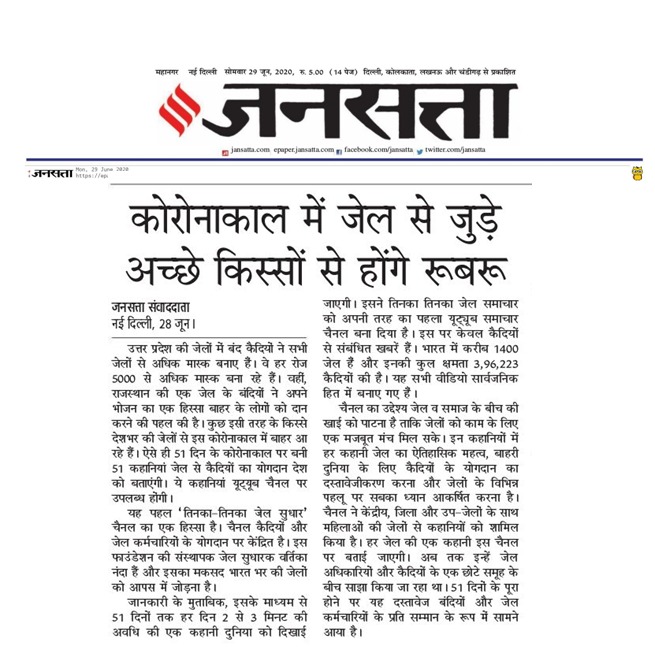
1. Tinka Tinka Dasna: Vartika Nanda: Tinka Tinka
Foundation: 2020
2. Television aur Crime Reporting: Vartika Nanda:
Rajkamal Prakashan: 2010
https://www.thenewsmanual.net/Manuals%20Volume%203/volume3_59.htm
3 https://sonamchoekyi.wordpress.com/2016/01/13/sources-of-news/
4. http://www.jprof.com/reporting/%E2%80%A2-sources-of-information/
5. https://www.sociologygroup.com/news-sources-importance-in-journalism/